Published by Sue Johns-Chapman
Published Date 15.10.2026
Published by Sue Johns-Chapman
Published Date 15.10.2026 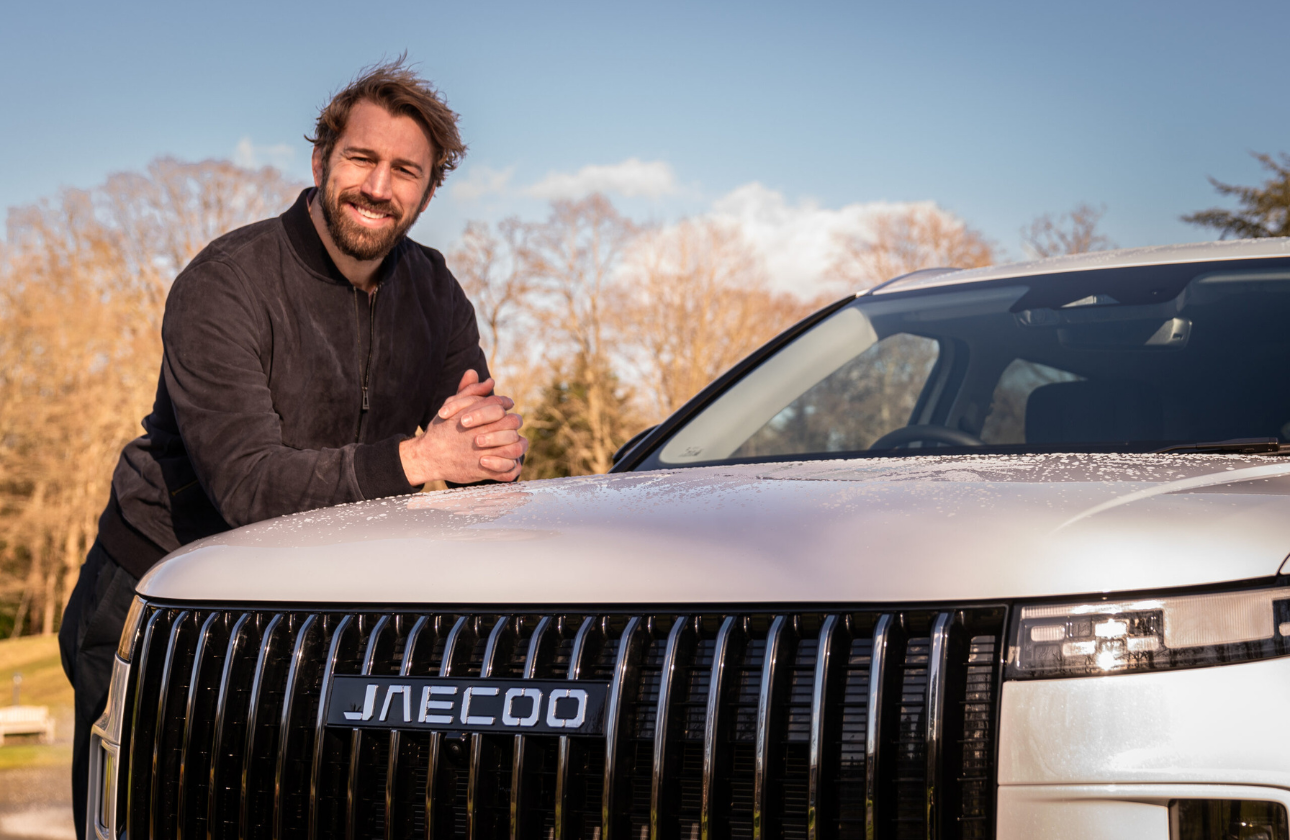
For years, marketers have talked about organic social as though it’s a supporting channel.
A place for community management. A home for campaign content. Somewhere to build engagement while the “real” brand building happens elsewhere. But what if we’ve got that the wrong way around?
At PHA, an earned-first integrated communications agency, we help brands build, grow and protect reputations through earned, social, digital and paid media. Across all the sectors we operate within, we’re seeing a common challenge emerge: attention is easy to buy, but trust is much harder to earn.
That challenge was front and centre when JAECOO appointed us as its lead social and creative agency ahead of its UK launch.
With no established audience, no heritage in the market and plenty of scepticism facing a new automotive entrant, the challenge wasn’t simply getting people to notice the brand. It was giving them enough confidence to consider it.
The resulting campaign, Earning Our Badge, has since been shortlisted at the Global Digital Excellence Awards. More importantly, it reinforced something we’ve been seeing more and more across the industry: organic social is becoming one of the most effective ways for brands to build trust at scale.
Here are three lessons we took from the experience.
1. Organic social is becoming a trust-building channel, not just an awareness channel
Most marketers would agree that social media is great at generating awareness. What’s often overlooked is its ability to build confidence.
Historically, trust has been earned slowly through brand reputation, customer experience and word of mouth. For challenger brands, that’s a problem. They don’t have years to wait.
When JAECOO entered the UK market, we couldn’t rely on heritage or familiarity. Everything had to be earned in real time.
Rather than treating social as a broadcast channel, we used it as a platform to demonstrate credibility. Through three core content pillars, Exploration, Technology & Innovation, and Lifestyle, we created a steady stream of content that helped audiences understand not just what the vehicle could do, but where it fitted into their lives.
Increasingly, consumers don’t want brands to simply tell them they’re innovative, family-friendly or high quality. They want evidence. That’s one of the reasons why social is so powerful. It allows brands to demonstrate rather than declare. Whether that’s through creator content, customer conversations, product demonstrations or real-world experiences, audiences can form their own opinions based on what they see.
Just as importantly, we paid attention to the conversations happening around that content.
Community management is often treated as box-ticking exercise, something that happens after publication. But it is much more than that. In fact, it plays a vital role in establishing audience relationships and creating brand affinity Increasingly, it’s becoming part of the customer journey itself. Questions, comparisons and comments create opportunities for brands to demonstrate transparency, expertise and responsiveness in public view. For challenger brands in particular, those moments can be every bit as important as the content itself.

2. Familiarity might be the most underrated metric in marketing
The marketing industry spends a lot of time talking about reach. Less time is spent talking about familiarity. Yet people rarely buy from brands they’ve encountered once. They buy from brands they’ve seen, recognised and gradually become comfortable with. That insight shaped much of our approach for JAECOO.
Rather than chasing one big influencer partnership or one viral moment, we focused on creating repeated exposure through people and environments audiences already trusted. Such content serialisation is a vital way for cutting through the noise on audience feeds, providing them with a reason to follow JAECOO and return, rather than simply engaging with a fleeting post before moving onto the next brand.
Former England rugby captain Chris Robshaw became a recurring face within the content ecosystem, while Millie Mackintosh and Hugo Taylor showcased the JAECOO 7 SHS-P within authentic family settings. Alongside creators across adventure, automotive, food and lifestyle communities, they helped build familiarity through repeated exposure. The creator collaborations were not one-and-done campaigns; they were part of a storytelling arc that ported back to the brand’s ethos that was laid out at launch.
“One of the projects that stands out to us was the Spring Lifestyle project and our collaboration with the Hugo and Millie family… [it] played an important role during JAECOO’s early launch stage. It helped audiences see the product capabilities of the JAECOO 7 SHS-P, as well as the lifestyle possibilities that the car could bring.”
- JAECOO UK Social and Creative Manager
That same principle extended beyond creators. From Goodwood and CarFest to the EPCR Finals and the Jurassic World Rebirth partnership, every activation gave audiences another opportunity to encounter the brand in a relevant context.

3. Consumers don’t experience channels in funnels
Marketers love funnels. Consumers don’t.
Someone might discover a brand through creator content, browse comments, search for reviews, visit a website, watch a product demonstration and ask a friend for their opinion before making a decision. Modern customer journeys are rarely linear. People move between platforms and sources of information depending on which questions they need answered.
That’s why social content increasingly serves as proof, not just promotion. It allows audiences to see products in real-world contexts, understand how they fit into everyday life and gather reassurance before taking the next step.
Over 12 months, the activity generated more than 303 million impressions, 161 million video views and built a community of more than 77,000 followers from a standing start. But the impact didn’t stop there…
Searches for “JAECOO” increased by more than 4,400%, while searches related to dealerships also rose significantly, indicating growing consideration and intent. By the end of 2025, JAECOO had achieved 3.4% market share and become the UK’s fastest-selling plug-in hybrid SUV.
Organic social wasn’t solely responsible for those outcomes; automotive purchases involve many touchpoints. What the campaign demonstrated, however, is that social can support far more than awareness when it’s treated as a long-term brand-building tool rather than simply a publishing platform.
What this means for brands
Being shortlisted at the Global Digital Excellence Awards is a proud moment for our team, particularly because it recognises the strategic thinking, creativity and collaboration behind the work.
For us, the recognition is also a reflection of a wider shift happening across the industry.
The most successful brands are no longer treating organic social as a place to post pretty pictures and content. They’re using it to build familiarity, earn credibility and support business growth. A legitimate business function that influences reputation, customer consideration and commercial growth.
And if there’s one lesson we’ll be taking forward, it’s this: attention might get you noticed, but trust is what gets you chosen.
More from us
PHA is an award-winning integrated communications agency, with a dedicated team of digital and social media agency specialists. Visit thephagroup.com to learn more, or follow us on LinkedIn and Instagram to stay up to date with the latest.